
Current Studies & How to Participate
Families affected by ReNU2 can make a meaningful difference. Below are active studies and registries that specifically involve RNU2-2 — each one advances understanding of this newly recognized disorder.
This page is for informational purposes only and does not constitute medical advice. Always discuss participation decisions with your qualified healthcare provider.
Current RNU2-2 Research Studies
INDEED Study
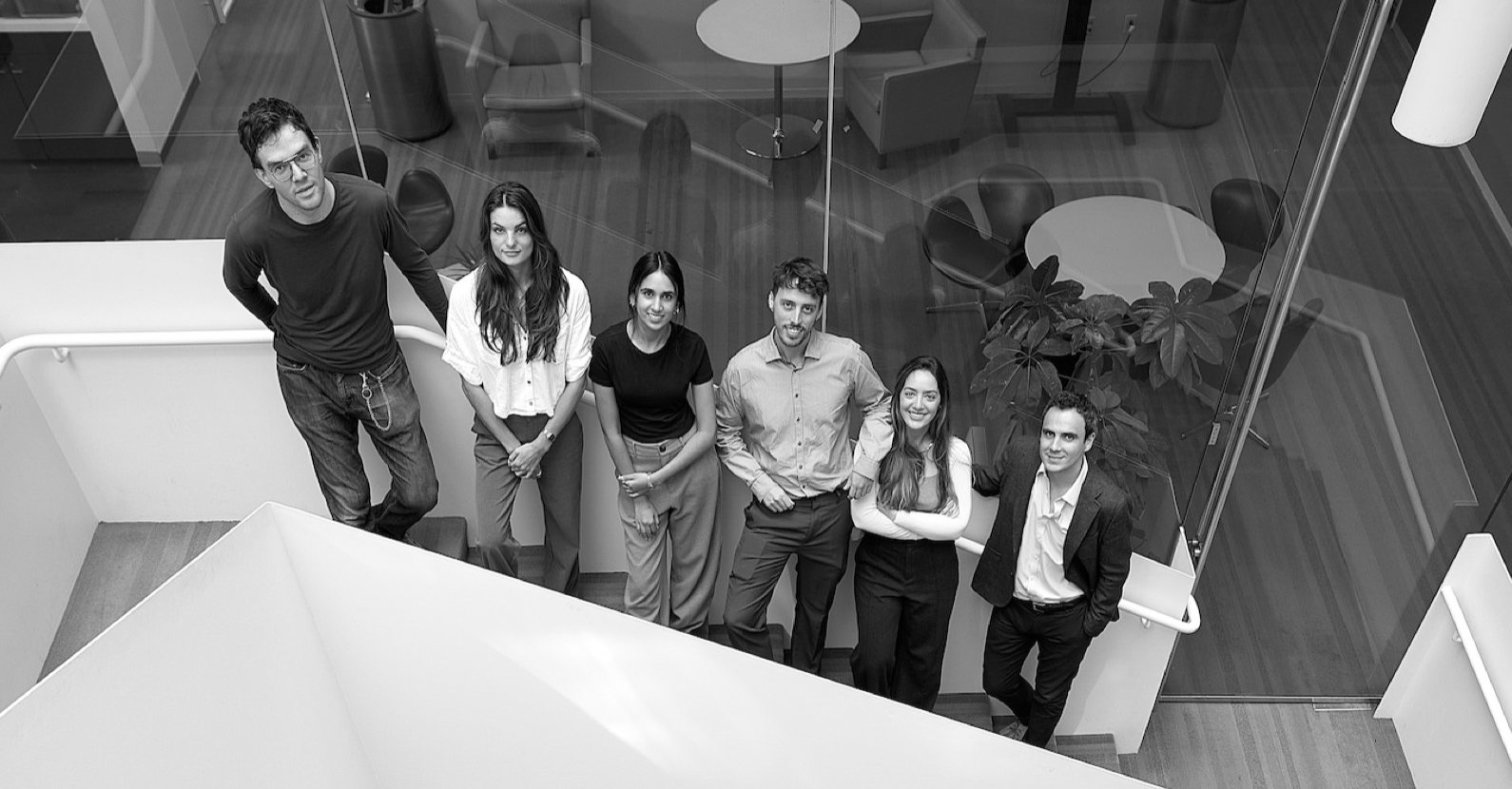
The INDEED study offers free research-use DNA sequencing of the RNU4-2 and RNU2-2 genes. The INDEED Study is part of an effort to better understand the genetic causes of rare and newly discovered diseases. We are committed to helping individuals & families find answers, contribute to groundbreaking research, and improve the future of rare disease diagnosis and care. By participating, you become part of a community working together to provide hope, clarity and progress to those affected by rare conditions. The INDEED Study has been approved by the Institutional Review Board at the Icahn School of Medicine at Mount Sinai.
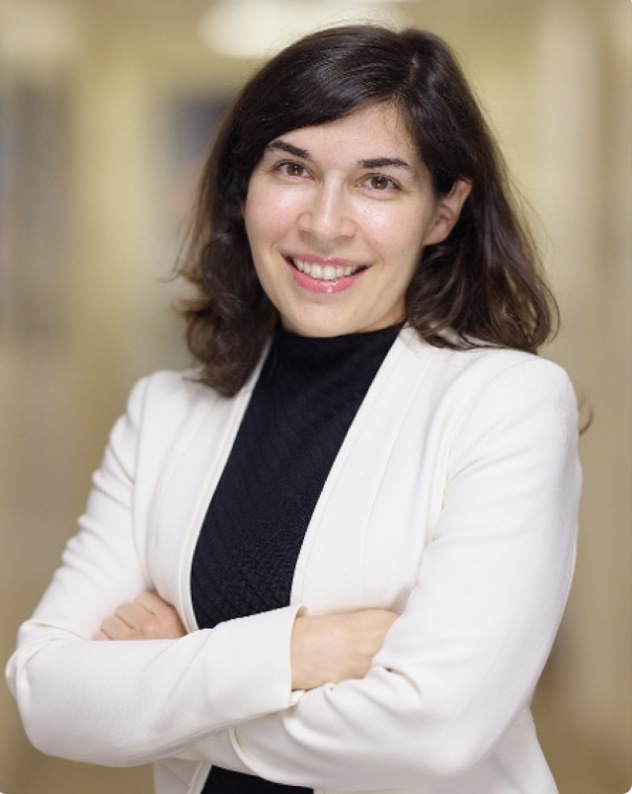
Principal Investigator: Dr. Ernest Turro, PhD
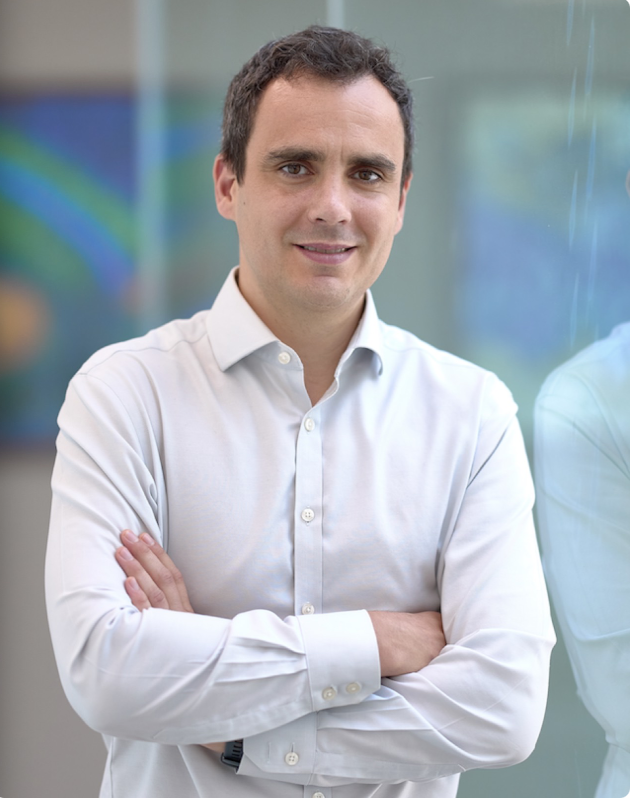
Co-Principal Investigator: Dr. Mafalda Barbosa, MD, PhD
Collaborator: Dr. Kathleen Freson, PhD
The purpose of the research study is to understand the genetic causes of rare and newly discovered diseases, especially those that current medical testing may miss. Our team discovered ReNU Syndrome and both dominant and recessive forms of ReNU2 Syndrome, so we have a strong focus on these particular disorders. By working closely with families, clinical geneticists, and researchers, we aim to improve our understanding of these conditions. We hope that your participation not only brings you closer to answers about your family member's condition, but also helps others facing a similar journey.
Boston Children’s Hospital Translational Neuroscience Center
RNU2-2 Research Program — Boston Children's Hospital
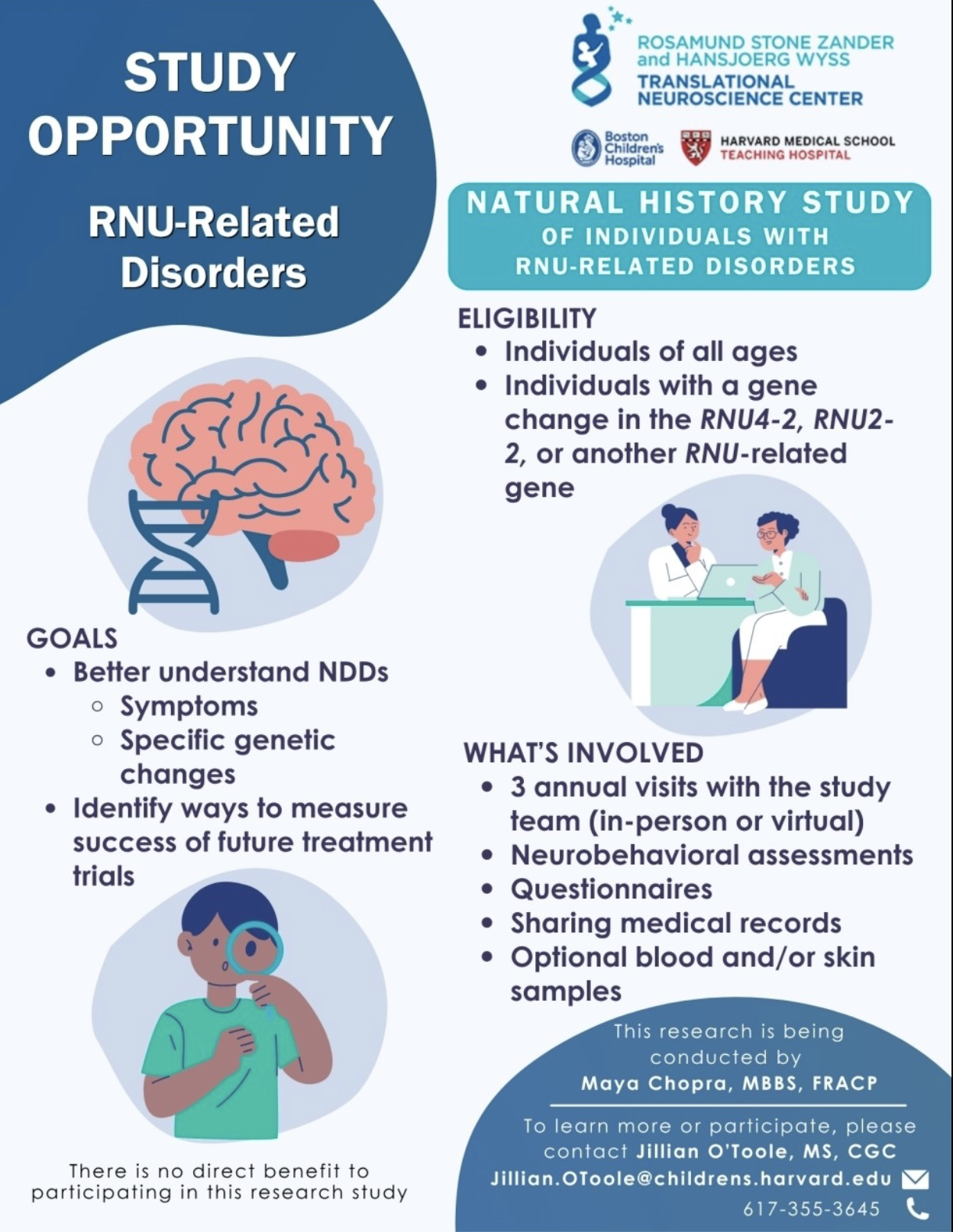
Researchers at Boston Children's Hospital are conducting research related to RNU2-2 and spliceosomal RNA disorders, with particular expertise in rare pediatric epilepsy and neurological conditions. The research is being conducted by Dr. Maya Chopra, MBBS, FRACP.
How to participate:
For more info: https://research.childrenshospital.org/research-units/translational-neuroscience-center
Contact the study team directly: Jillian.OToole@childrens.harvard.edu
Call: 617-355-3645
Facial Analysis & AI Phenotyping
These AI-powered platforms analyze facial photographs to help identify patterns linked to rare genetic disorders, including RNU2-2.
Face2Gene
Face2Gene is used by clinicians and genetic counselors worldwide. By analyzing a patient's facial photograph and clinical data, it generates a ranked list of possible genetic syndrome matches — including RNU2-2.
People who have already received a ReNU2 genetic diagnosis:
Submit photos via this site to help train the Face2Gene algorithm on ReNU2 syndrome
People without a genetic diagnosis:
Click below to go to the FDNA Family Health Checker and use the code "RENU01." Please note that this option is currently only available to US residents.
You will be asked to answer questions. At the end of that process, you can upload photos to receive a report with "best-matched conditions," including dominant ReNU and dominant ReNU2 but not yet recessive ReNU2. Please bring that report to your doctor or genetic counselor
GestaltMatcher — University of Bonn
GestaltMatcher uses AI to analyze medical facial photographs and identify features linked to rare genetic disorders. Families can contact the research team directly. Each RNU2-2 case added helps future undiagnosed families receive faster answers.
**How to participate:**
- Contact Dr. Annabelle Arlt: annaarlt@uni-bonn.de
- Or contact Dr. Peter Krawitz: pkrawitz@uni-bonn.de
- Explore the database: db.gestaltmatcher.org
An international 3D facial imaging study open to RNU-related conditions. Participation takes less than 20 minutes and uses video (not flash photography), making it easier for children who may be sensitive to bright lights or cameras. Learn more: hallgrimssonlab.ca
FaceBase — University of Calgary
ReNU2.org is strictly an informational website and does not provide medical advice, diagnosis, or treatment. Study contacts and availability may change — please verify details directly with each research team before reaching out